

Aura Loss
Shopping, not shopping, and the ever-changing thingness of things
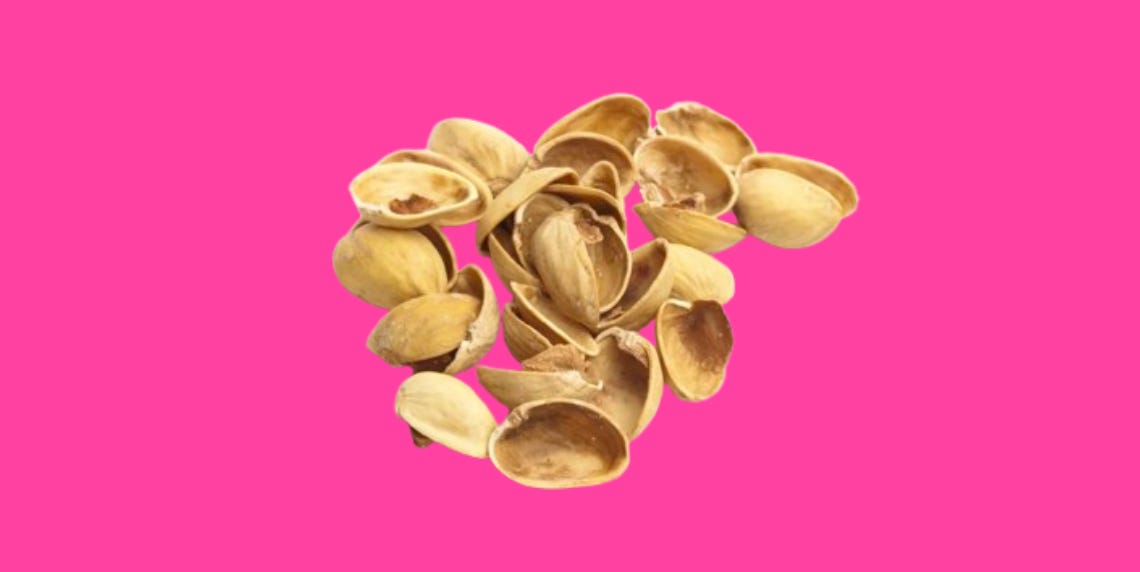
When I was a kid, my things felt like my pets. There was an aliveness to them. Not just toys, either— I worried about how my garbage felt when I threw it away. I would imprint on a random tumbleweed I found and carry it around for days. I implored family members to give me their empty pistachio shells instead of throwing them out, meticulously saving my collection in a plastic freezer bag. One winter I lost a precious calculator at recess in a snowy field. I still think about it. Objects felt like they had more eternity then, when the world was newer, my mind more elastic. It disturbed me to imagine the calculator, essentially a magical tool or talisman, lost somewhere under the snow. When it melted in the spring I went back to look for it, even though I knew that the water would have long ago broken the machinery. It didn’t feel like I was looking for the calculator, it felt like I was looking for its body.
How long is it possible for an American child to maintain this sensitivity to things, to the aliveness of them? Just a few years after the calculator incident, I was squarely within my “mall rat era.” Perversely nostalgic, this period was marked by the dire need to obtain as many cheap, small goods as possible. Miniature Yankee Candles, Bath & Body Works hand sanitizers, Forever 21 jewelry that left green marks on your fingers when you pulled it off. My friends and I gathered this stuff like bowerbirds. It was a thrill to own something, to choose something. The feeling renewed itself later in adolescence when we realized we could also buy cheap stuff online. In fact, there were even more varieties of cheap stuff online than there were at the mall, stuff that spoke to more and more specific desires, physical expressions of our identity, our personal style, our brilliant curatorial instincts. We moved into our first apartments and needed flat-pack furniture and tastefully ironic wall art. A lot of this stuff was disposable, falling into disrepair and jettisoned off in the move to a new city or a vigorous spring cleaning. I still felt some guilt when I threw one of my things away, but now things were easier to come by— I could forget about it within a few hours. Patterns formed, calcified. The thingness of things warped. Without a second thought I grabbed extra items to reach a free shipping threshold, signed up for email lists to get a discount on my first order.
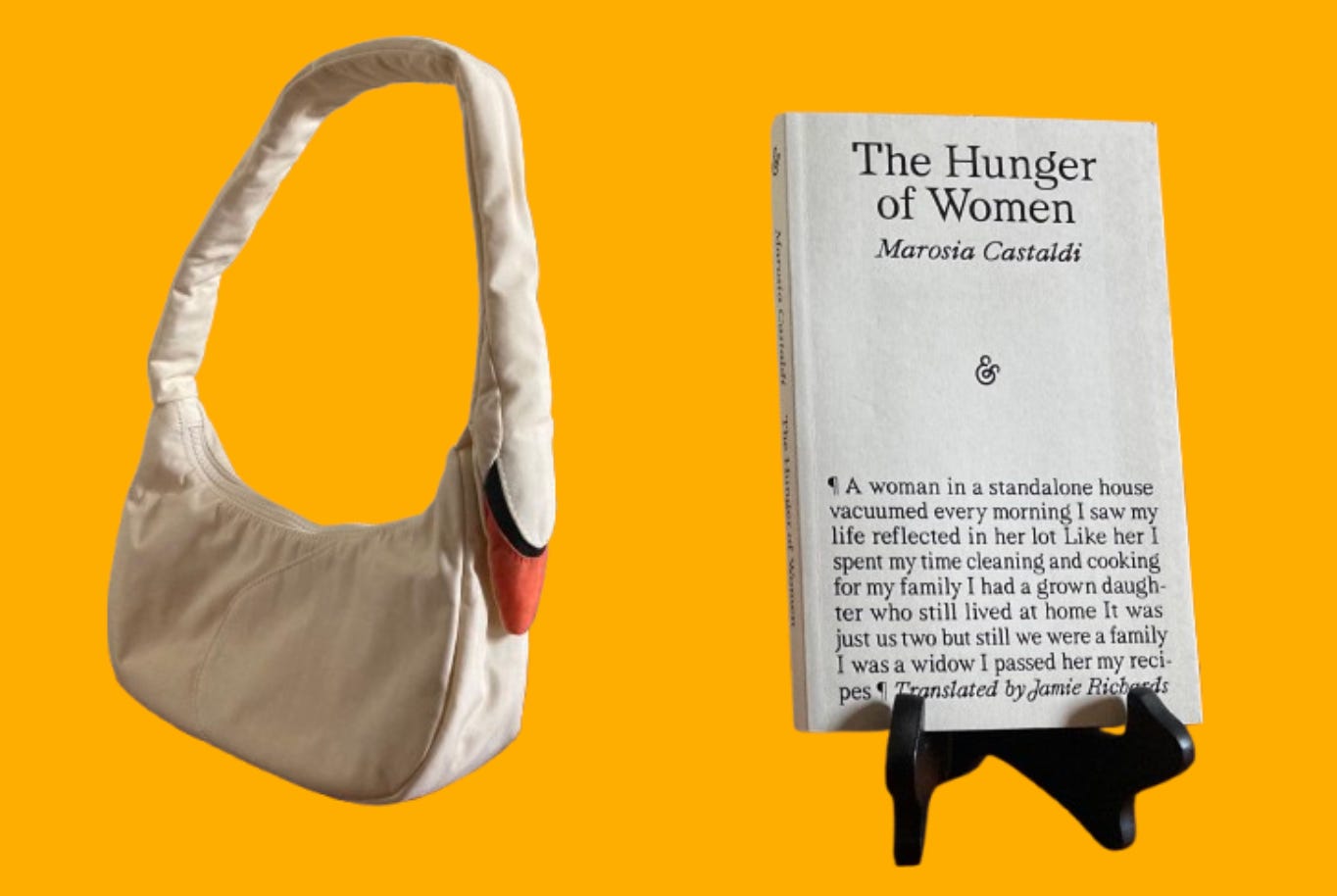
Over time, the aliveness of my childhood calculators and tumbleweeds was replaced by a kind of anticipation of aliveness, a consumerist aura surrounding things not-yet-had. Now I’ll fixate on a beautiful object for weeks, months, even years before I buy it, knowing that the pleasure of wanting usually eclipses the pleasure of owning. Even things I wouldn’t describe myself as particularly interested in (lip gloss, sunglasses, flavored water) entice me because marketing works so well, infusing them with a powerful form of sympathetic magic. Objects of desire create alternate versions of myself, more creative, sophisticated, healthful, charismatic alter egos in my mind’s eye. Obviously none of us logically think that wearing a pair of Oakleys will really make us run faster, or that drinking Bai will make us Sydney Sweeney, but also… don’t we think that, just a little? Even my personal goals and aspirations that feel most “interior-facing” can lead me to acquire items, items that I convince myself will change my attitudes and behaviors. A quirky little purse might develop the playful side of my personality. Another gorgeous book on my shelf might tempt me to read more often, more widely. Shopping as the easiest form of self-development, the allure of these consumerist auras as a substitute for the real work of inner change.
Sheila Heti writes in her wonderful essay “Should Artists Shop or Stop Shopping?”: “Buying keeps me… in a certain state, a state of waiting (for the thing to arrive), a state of limbo (between my life as it is now, and the life I imagine I will live once I have it), a state of unreality, of wishful thinking, of magical thinking (that my life will be different once it arrives), a state of disappointment (when the thing I bought is absorbed into my life like everything else, and does not distinguish itself as new), a state of need (to buy the next thing that will lift me out of this here.) But what is this place I am in, and trying to escape? What is this here, but shopping? My home, and the computer on which I write, and the phone in my pocket, everything around me—has become a shopping mall. I am here in a shopping mall and I can’t get out. I can only get out if I stop buying things.”
Recently I started experiencing what I’ve been thinking of as a “consumerist Saturn Return.” I think it might be common among my age cohort (late twenties/early thirties) to experience a break in the shopping norms we’ve come to absorb, a realization at their dizzying absurdity—at least, it seems so according to my YouTube algorithm. In a recent video on underconsumptioncore1, video essayist Tiffany Ferguson mused that a sudden awareness of consumer excess might be a “classic coming-of-age moment” for young adults. I’ve become increasingly drawn to a cluster of videos like Ferguson’s this year, which orbit around a shared resistance to overconsumption culture: chatty play-by-plays of mindful purchasing decisions, personalized no-buy challenge rules, “anti-hauls” and “de-influencing” videos detailing things they aren’t going to buy (or occasionally, celebrating their oldest possessions), reaction videos to “waste-baiting” TikTok accounts.
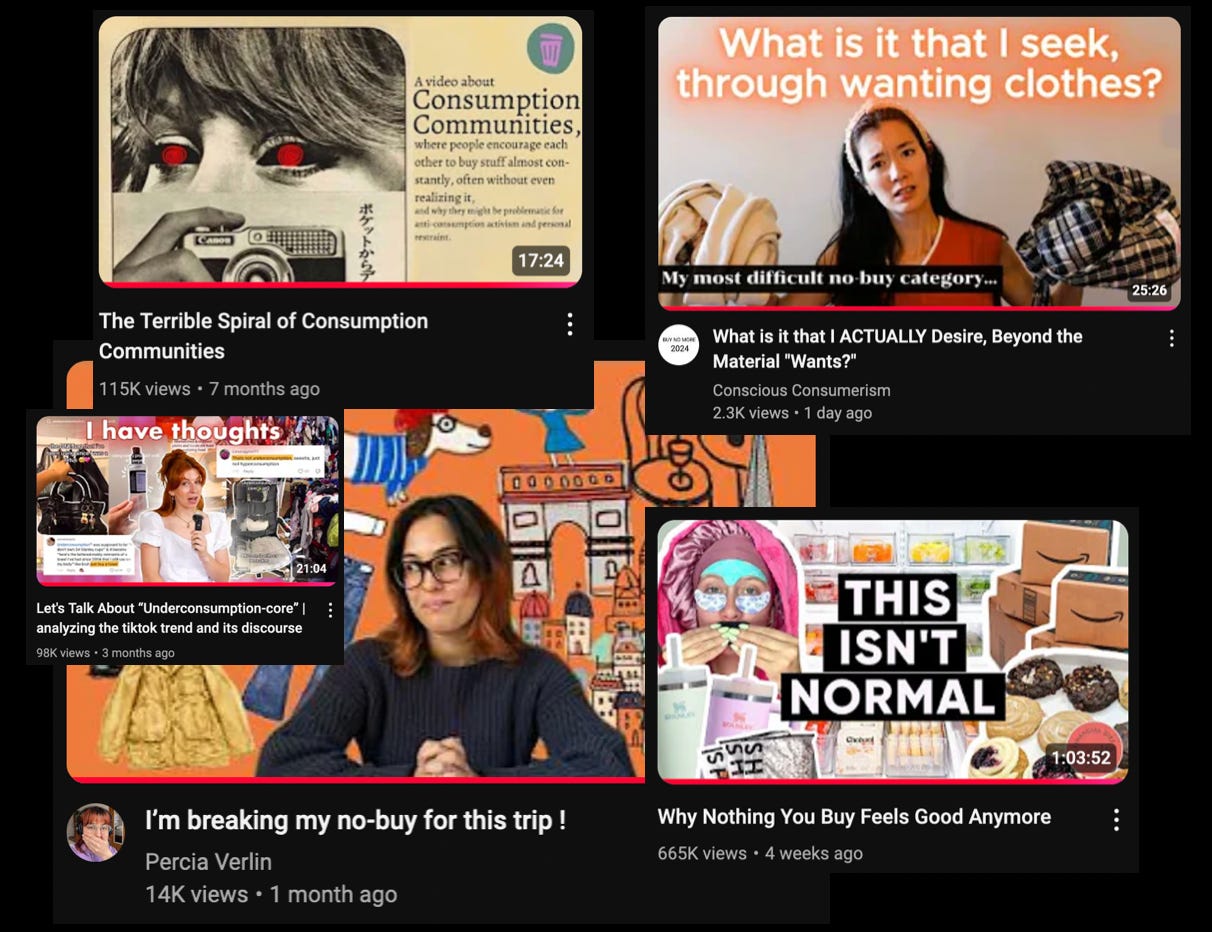
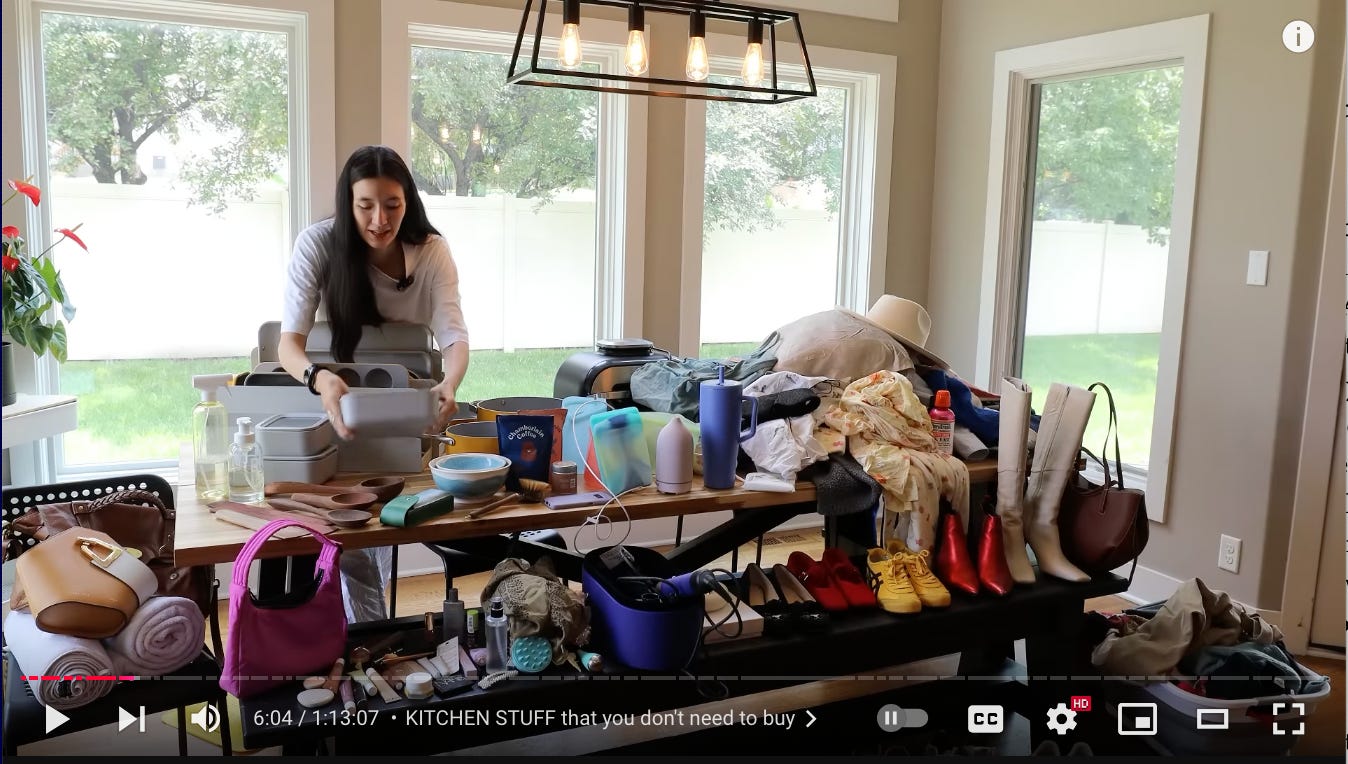
These videos come from any number of perspectives— financial, ecological, Marxist, minimalist. I’m most interested by their inconsistencies, devouring a year’s worth of no-buy vlogs from a woman who later became an out-and-out makeup influencer, or a long-winded rationale of why someone bought a $900 espresso machine on their low-buy year. Among the most relatable to me is one called “A Radical Display of Everything I was Influenced to Buy,” in which a young woman on a no-buy challenge displays thousands of dollars worth of clothes, makeup, and home goods she’s acquired over the years and explains what creators and trends triggered each aspirational purchase. (Many of the inciting influencers were also no-buy vloggers—the same ones that I had watched, that trained YouTube to recommend her video in the first place.)
I’ve tried a handful of my own experiments with shopping over the course of 2024, including “no-buy months” in which I refrain from purchasing any new things I don’t need (read: groceries are fine). Here’s a sort of captain’s log of that experience for me:
Day 1: The boundary immediately makes me uncomfortable. I run through an anxiety-driven list of things that might happen that would force me to break the experiment.
Day 3: Still feeling itchy. I continue keeping a detailed wishlist of stuff I’ll surely purchase the day after this infernal month is over.
Day 5: I become very aware of the stuff I already have, the materiality of it, its use value (or lack thereof), the qualities of its shape and size and color. It makes me think a little of psychedelics, how they cause the thingness of things to be particularly thingy, and particularly hard to describe.
Day 7: Something unnecessary breaks or gets used up, and my knee-jerk reaction is to replace it. Realizing that I can actually go a few weeks without it is kind of liberating.
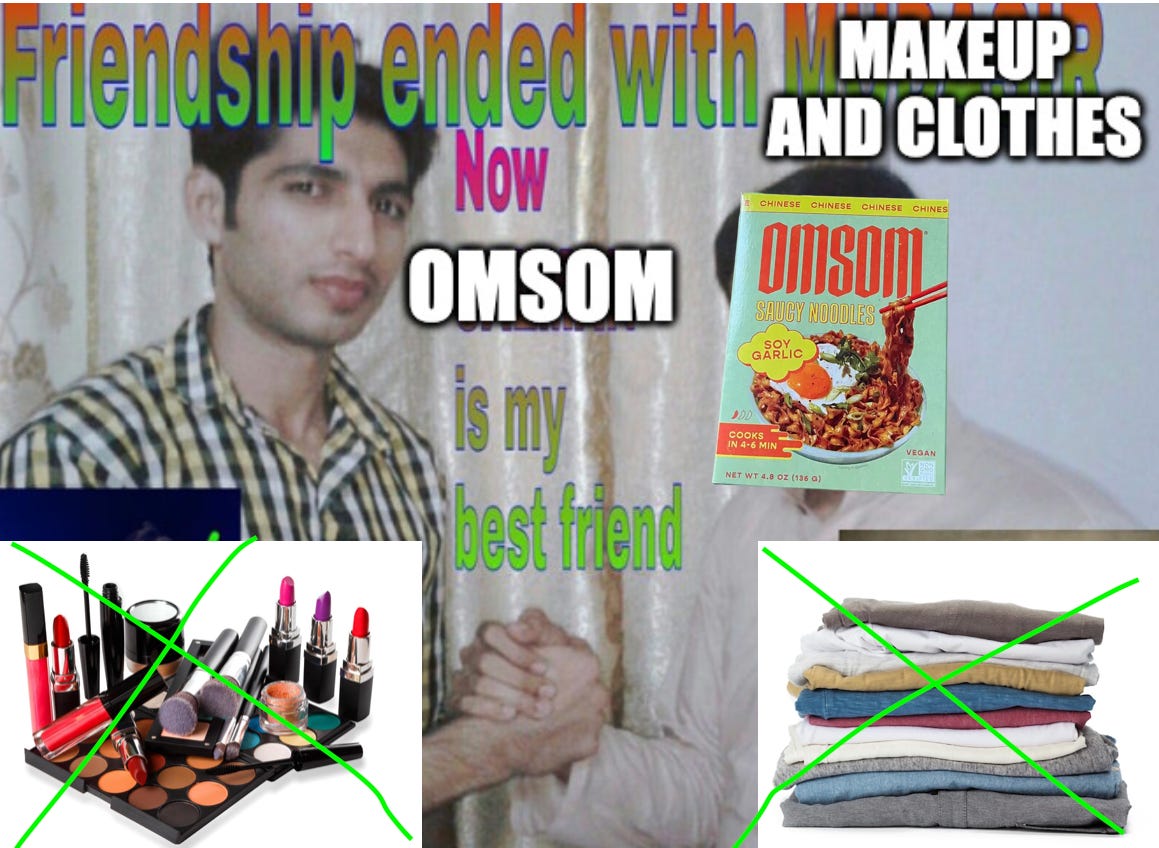
Day 10: Since “groceries are fine,” I find myself channeling my shopaholic impulses into my grocery trips, biking 10 miles out of my way for trendy sports drinks and boxes of noodles from sinister grocery empires.
Day 12: Annoyance that the trendy noodles are really good and now I’ve developed a taste for them.
Day 15: A period of hubris in which I believe that I am actually attaining nirvana and there is nothing I ever need to buy ever again, including the trendy noodles, and thank god I figured all of this out now so I will never again be tempted by superficial fantasies.
Day 20: Emerging sense of peace. Avoiding the constant decision of whether or not to buy something is proving to be a cognitive boon, exposing the stress of my constant need to pick things out.
Day 31+: I almost never buy the things I had decided earlier that I needed. The aura of desire surrounding them has already faded away.
Why does the aura fade now, more easily than it used to? Maybe at a certain life stage in a hyperconsumerist environment, we’ve accumulated enough cheap junk that our gathering instincts just calm down. A misplaced scarcity mindset ebbs, or gets smarter from experience. Maybe an inevitable tragedy snaps us out of it. Or we’ve started to realize that constant growth does not actually make for a good life, as Kate Soper argues in her book Post-Growth Living (an eco-hedonist manifesto that I really enjoyed).
It’s also possible that the anticonsumerist ideals that many of us have believed and espoused for years are finally starting to sink in and be felt, rather than just abstractly known. I don’t think I’ve ever really allowed myself to experience the acute emotional panic and grief of climate change. Having a passable understanding of commodity fetishism doesn’t make me feel rather than know that someone makes the things I touch, and that someone takes my trash away, and that in most cases that stuff sits in a landfill for longer than I will be alive. Internalizing that my things have a past and a future as items in the world and not abstract expressions of aesthetic choices is powerful—it sounds dramatic to say it feels a bit like waking up from a dream, but it does. As I watched the objects piled up in “A Radical Display of Everything I was Influenced to Buy,” what I noticed most was their aura loss: the cute ceramic cookware has stains, the cord on the Dyson Airwrap is tangled, “it girl” fashion items are piled up haphazardly. It all just looks like somebody’s stuff.
Maybe aura loss is the wrong word for what I’m feeling. More accurately, the auras of things flicker. Yesterday was Black Friday, and I bought some skincare (a stubbornly high-aura category for me) that I didn’t need, and some holiday gifts that I had vowed and failed yet again to make instead this year. I found myself, to my horror, explaining to my boyfriend with complete seriousness that I am “more of a NYMag Strategist girl” compared to NYT Wirecutter because “Wirecutter’s recommendations have been going downhill.” What the fuck am I talking about?? The flickering can have a mind-bending effect in which I become genuinely unsure of whether I need something or not, who is trying to sell me what and why, how much things (should) really cost, whether I’ve spent so much time in my algorithm that my perception of how much people shop is completely distorted. There are a lot of emotions tied to our belongings, consumer identities, fantasy selves, money. This is all to say that I don’t have a consistent philosophy of consumer ethics, and of course “there is no ethical consumption under late capitalism”— however annoying it is to hear that pithy phrase repeated among my generation to assuage the guilt of buying fast fashion items.
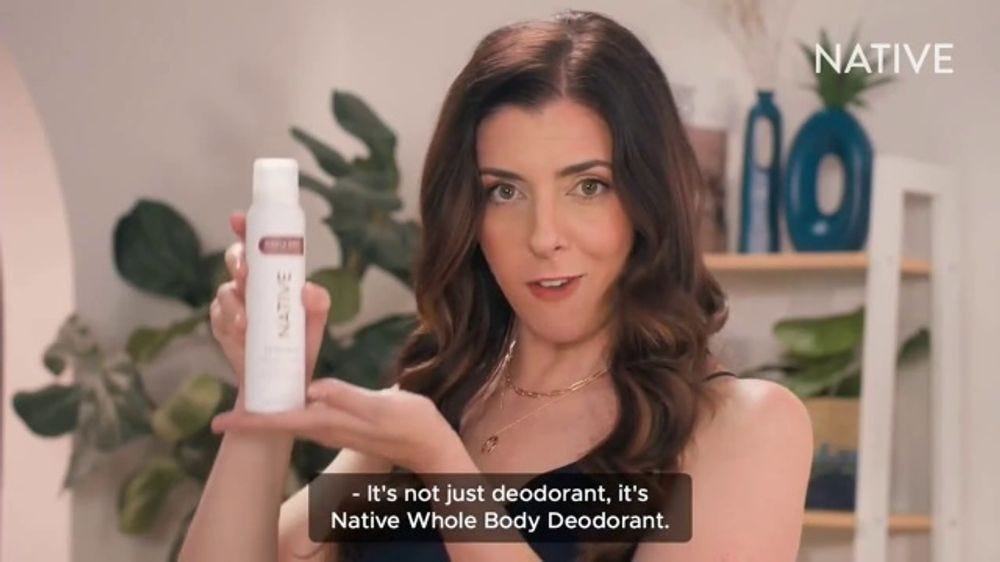
It helps me, I think, to articulate my consumer experiences by stating them as objectively as possible. Are they practical? Motivated by aspiration, fear? Just nakedly absurd? I enjoy the soothing experience of watching this fitness influencer apply retinol cream. I think my landlord’s neglect to install an exhaust hood on my stove is going to damage my health, so I plan on shopping for an air purifier. This commercial is attempting to convince me I need a new kind of deodorant designed not only for the armpits, but for the entire body.
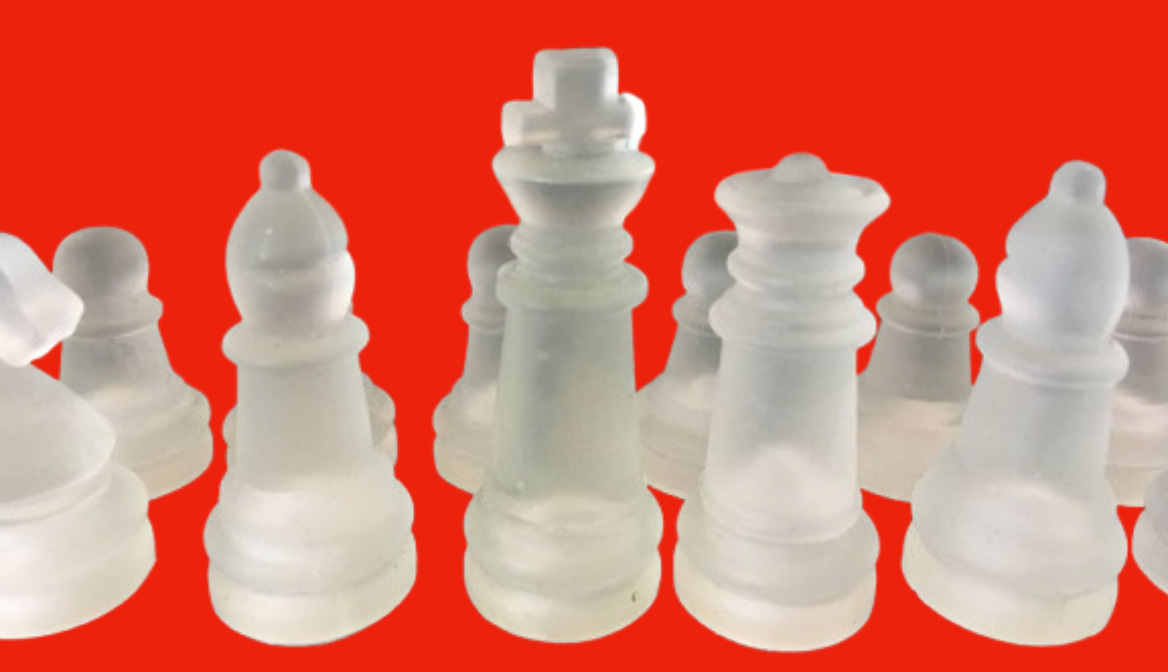
My boyfriend and I were trapped inside in the rain on Thanksgiving, and we unearthed an old glass chess set that I had completely forgotten we had. I think it was a white elephant gift that one of my parents got from work decades ago, but I had never once played a game with it—not even after I transported it from their home to ours and tucked it away in a closet. I lost every game but I had an amazing time. Later I thought about how ridiculous it was that we had this dormant object for so long, a thing with lovely afternoons locked inside of it, unused. I suspect everyone has things like this. Perhaps when we acquired them, we suspected they would be useful, beautiful, interesting, that they would transform us. Does it make more sense to “declutter” this unused stuff (isn’t decluttering just a nice euphemism for “trashing?”) or to make a good-faith effort to play with it again? I wonder how much we might dim the auras that surround the idea of new things by rekindling the auras of the stuff in the back of the closet. In other words, can I learn to want what I already have?
I started writing this letter earlier in the fall, then stopped for a while after the U.S. election. It felt silly to be writing so much about shopping. But I’m more and more convinced that the deeply entangled nature of our world does make fumbling around in the mess of our personal and collective consumption habits important. The hummus companies funding a genocide in Gaza, aggressive union-busting at “The Everything Store” (and luxury car manufacturers and coffee chains and and and ad nauseam), the centuries of violence that make food products from faraway bioregions available to buy in my community grocery store, the cobalt mines that help produce the electronics that stream all of those YouTube videos—they’re all connected in a million little ways to my own relationship to shopping and capital. The actions borne out of my desire to become someone else through the acquisition of things, my flawed attempts to live a life free of friction and discomfort.
My mom recently reminded me of another anthropomorphic habit I had as a kid: I’d save dozens of paper towels in a shoebox, drawing patterns on each of them with marker. Every one had their own name and backstory, their own place on an imaginary family tree. I really loved these things, though I knew they were designed to be disposable. I spent hours playing with them. Their personalities felt real, and it was special that I had not just discovered them, but co-created them, imagined their world.
I don’t think it’s a reasonable suggestion to live an adult life with a child’s mind, enchanting every piece of trash into treasure and mourning every single instance of waste. But I do think it’s worthwhile to approach my things with more imagination, to do my best to take care of them well, and to see their aliveness even after the original aura has faded away. After all, each thing has a place in a web of relationships, connected to all the rest.
Thanks for reading! I meant to write much sooner, but you know how it is. I’ll follow up with some end-of-year reflections soon. 🛍
Help… was “underconsumptioncore” a concept actually known to the mainstream? I genuinely cannot tell.